
Gel vs Foam Wheelchair Cushions: Which Material Does What?
Short answer: foam is light and inexpensive but slowly compresses flat; gel spreads sitting pressure more evenly and feels cooler at first, but weighs more. That is why most cushions for long sitting hours combine both — a gel layer working over a supportive foam base.
How each material behaves under a seated person
Foam supports by compressing. Where the body presses hardest, the foam presses back hardest, so pressure concentrates under the sitting bones. Foam is light, cheap and easy to cut to shape, which is why it is everywhere. Its weakness is time: after months of daily use, ordinary foam can stay compressed in the centre ("bottoming out"), and the cushion quietly stops doing its job. Foam also insulates — it holds body heat against the skin.
Gel supports by displacing. A gel layer flows sideways away from pressure points and settles into the body's contours, which evens out the pressure peaks foam creates. Gel feels cool on first contact. Its weaknesses are weight — a full gel cushion is noticeably heavier to lift and carry — and the fact that the cool feeling is temporary: over a long sit, the gel reaches body temperature like any other material.
Neither material replaces repositioning and regular pressure relief for wheelchair users with medical needs; a cushion is one part of pressure care, and clinical users should be guided by their clinician.
Gel vs foam, side by side
| Gel | Foam | |
|---|---|---|
| Pressure spreading | Displaces sideways, evens out pressure peaks | Compresses; pressure concentrates at the hardest points |
| Heat feel | Cool on first contact, equalises over time | Insulates, holds body heat |
| Weight | Heavier | Light |
| Shape over time | Keeps its form; does not pack down | Can compress flat with daily use |
| Cost level | Higher material cost | Lower material cost |
| Typical use | Top comfort layer, long sitting hours | Base support, budget cushions, shaped contours |
Why most gel cushions still contain foam
In practice, the two materials are usually combined rather than chosen between. A foam base gives the cushion its shape, height and support at a manageable weight and cost; a gel layer on top does the pressure-spreading and gives the cool first-contact feel. Our own range is built this way:
- The donut gel seat cushion (40 × 40 × 7 cm) pairs a gel layer with a foam ring, so the centre opening off-loads the tailbone area while the foam ring carries the shape.
- The flat gel seat cushion (40 × 40 × 2.5 cm) puts a grid gel layer over bamboo charcoal memory foam — a thin add-on for wheelchairs and office chairs.
- The contoured gel seat cushion (40 × 34 cm) uses a shaped foam base — the contour is foam's job — with a grid gel top.
See the full range on the wheelchair cushions category page.
What to check before ordering for a wheelchair or rehab range
- Construction, not just material name. Ask how much of the cushion is actually gel — a full gel pad, a gel layer over foam, or a thin gel sheet behave very differently.
- Size range. Wheelchair seats vary; check which seat widths the cushion line covers and whether custom sizes are possible.
- Cover and cleaning. A removable, washable cover matters in rehab and care settings; check the bottom fabric too (non-slip helps the cushion stay in place).
- User weight and sitting hours. State the user group the cushion is intended for and ask the supplier what the cushion was designed for — do not rely on the material name alone.
- Weight of the cushion itself. For users who lift their cushion in and out of a car, gel weight is a real buying factor.
FAQ
Q: Is gel better than foam for long sitting? A: For pressure spreading, generally yes — gel displaces and evens out peaks that foam concentrates. But the best long-sitting cushions usually combine a gel layer with a foam base, rather than using gel alone.
Q: Does a gel cushion stay cool all day? A: No. Gel feels cool on first contact because it starts at room temperature and draws heat away from the surface. Over a long sit it equalises to body temperature; the lasting benefit is pressure spreading, not cooling.
Q: How long does a foam cushion last compared with gel? A: Ordinary foam gradually compresses and can stay flattened in the centre, losing support. Gel does not pack down in the same way, which is one reason gel layers are used where the cushion must keep its behaviour over time.
Q: Can the same cushion be used on a wheelchair and an office chair? A: Often yes for flat seat cushions of standard sizes (around 40 × 40 cm), provided the seat size matches. Contoured and ring cushions are more purpose-specific, so check the shape against the chair.
Q: What should distributors ask the factory? A: Ask for the construction breakdown (gel thickness and foam type), the size range, cover materials and cleaning method, and whether sizes and packaging can be customised for private label.
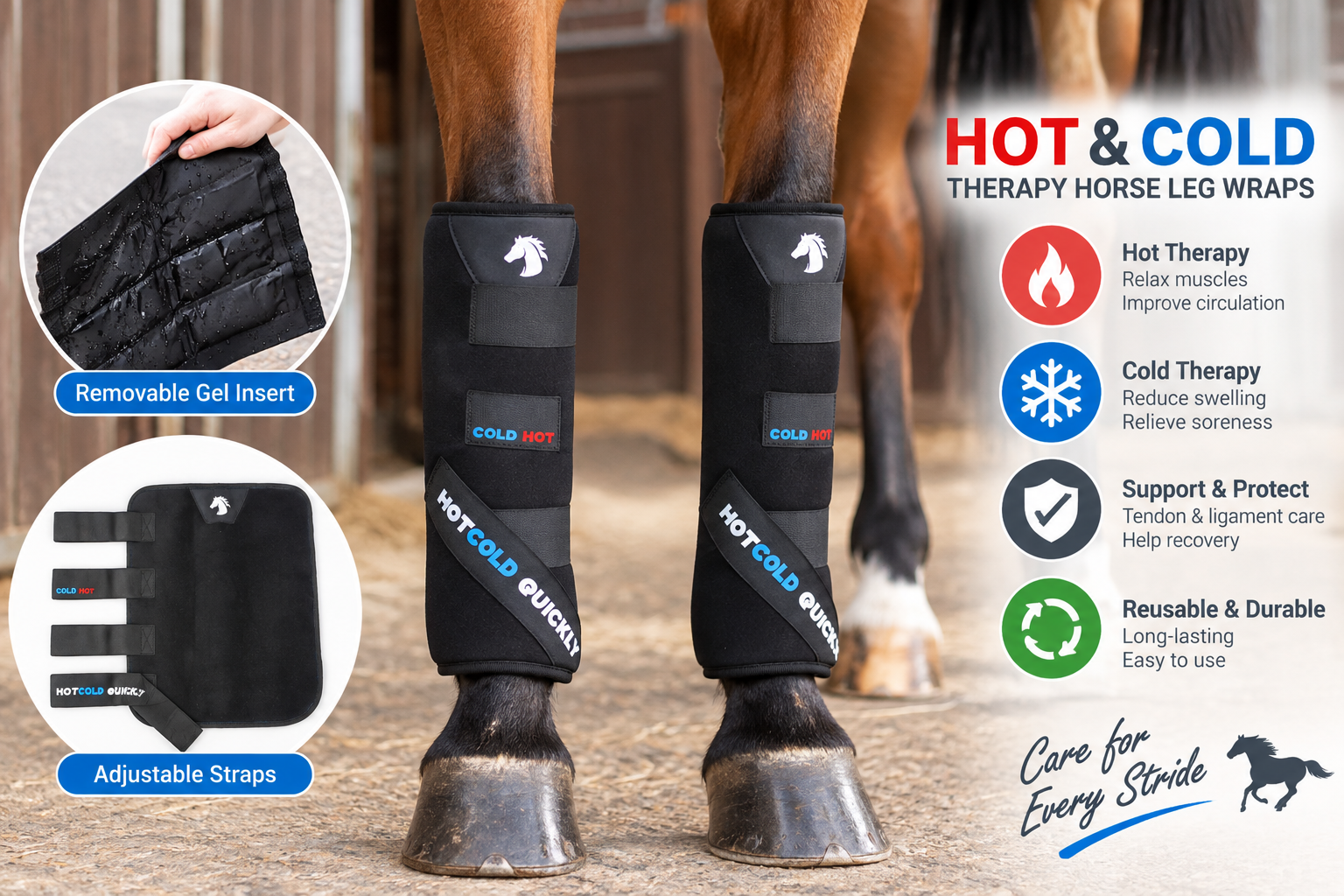 Why Hot & Cold Therapy Is Becoming Part of Everyday Horse Leg Care
